Nature Stuff mdavid.com.au

The Latest Pics Archive

Okay, I realise that an archive of a latest pic is a contradiction of terms. But you get the idea — each of these images was once the ‘latest’ to appear on the home page.

Photo 39

Chestnut-breasted Mannikin

Chestnut-breasted Mannikin (Lonchura castaneothorax)     RETURN TO HOME PAGE

Photo 38

Variegated Fairy-wren

Variegated Fairy-wren (Malurus lamberti)     RETURN TO HOME PAGE

Photo 37

Masked Lapwing

Masked Lapwing Vanellus miles novaehollandiae     RETURN TO HOME PAGE

Photo 36

Variegated Fairy-wren

Variegated Fairy-wren Malurus lamberti male in breeding plumage     RETURN TO HOME PAGE

Photo 35

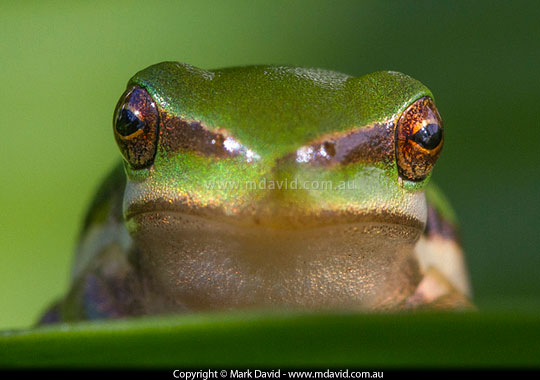
Eastern Dwarf Tree Frog

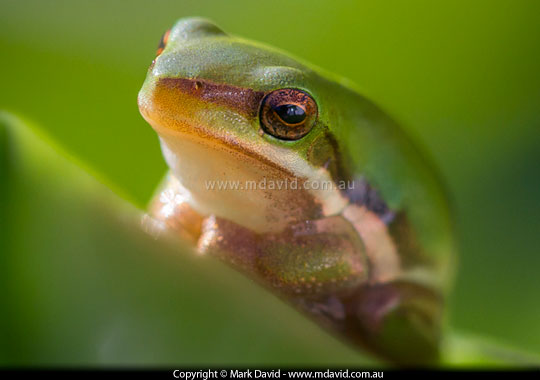
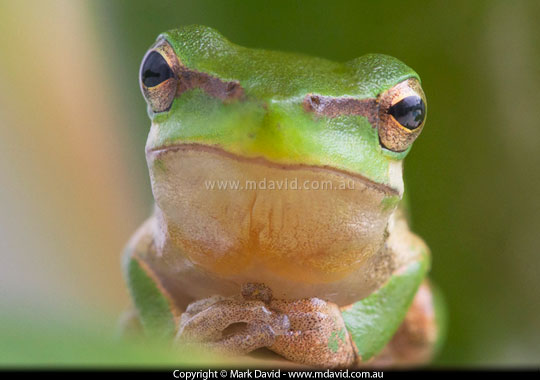
Eastern Dwarf Tree Frog Litoria fallax     RETURN TO HOME PAGE

Photo 34

Pale-headed Rosella

Pale-headed Rosella Platycercus adscitus     RETURN TO HOME PAGE

Photo 33

Grey Fantail

A Grey Fantail (Rhipidura fuliginosa) perched in a patch of sunlight. The Grey Fantails is an active bird, regularly fanning its tail and then flying from branch to branch. To get this shot I waited near the bird with my lens focused on the branch until the bird’s natural curiosity took over, at which time it perched long enough for me to get this shot. It soon became even more inquisitive and started flying right up to within inches from my face, but unfortunately I wasn’t quick enough getting focus to be able to get a shot of that.

Grey Fantails are found throughout Australia and often announce their presence by their repetitive chirping.     RETURN TO HOME PAGE

Photo 33

Scaly-breasted Lorikeet

A Scaly-breasted Lorikeet (Trichoglossus chlorolepidotus) peers out from a nesting hollow high up in an old gum tree. Nesting hollows like these are left behind as scars where old branches have died and fallen off.

Falling branches can leave an almighty dent in a house, and you sure don’t want to be standing under one either. Yet the hole left behind in the tree is of great value to many species of animals, including birds. So this presents itself as a bit of a dilemma for city councils. While most councils don’t want to stop wildlife thriving and breeding in their municipalities, they also don’t much like the idea of extremely heavy branches falling onto perfectly innocent rate-payers. So in the city, more and more branches are removed long before they look like falling, and this is resulting in a shortage of decent nesting hollows in towns and suburbs.

So it was nice to see this hollow, complete with a pair of birds, during a recent country stroll.     RETURN TO HOME PAGE

Photo 32

Variegated Fairy-wren

Last week it was a Superb Fairy-wren. This time it’s a Variegated Fairy-wren (Malurus lamberti) shown peeking out from behind a branch. It’s a common assumption that all the drab-looking fairy-wrens are females, which is hardly fair because the non-breeding males can look mighty drab too and closely resemble the females and younger birds. It’s only when the male bird grows its breeding plumage (inset) that they get the spectacular colours for which they are well known. So, while all the brightly coloured ones can safely be said to be males, it is not correct to say that all the drab ones are females. Variegated Fairy-wrens are distributed across most of Australia.     RETURN TO HOME PAGE

Photo 31

Superb Fairy-wren

A male Superb Fairy-wren (Malurus cyaneus) decked out in full breeding plumage always makes an impressive display. This one was in Sydney.     RETURN TO HOME PAGE

Photo 30

Eastern Grey Kangaroo joey

An Eastern Grey Kangaroo joey pops its head up from the grass. While taking this shot, its mum was nearby, watching me very carefully.     RETURN TO HOME PAGE

Photo 29

Lantana Treehopper

A Lantana Treehopper (possibly Aconophora compressa) on the stem of a Fiddlewood tree. Lantana Treehoppers were released in NSW and Queensland to help reduce the vigour of infestations of the weed Lantana (Lantana camara). Qualifying as a true bug these little guys have mouth parts modified for sucking sap. They will often cover the stems in very large numbers, leaving the branches sticky from honeydew.     RETURN TO HOME PAGE

Photo 28

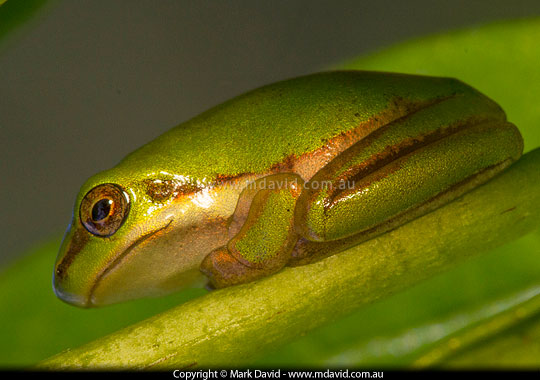
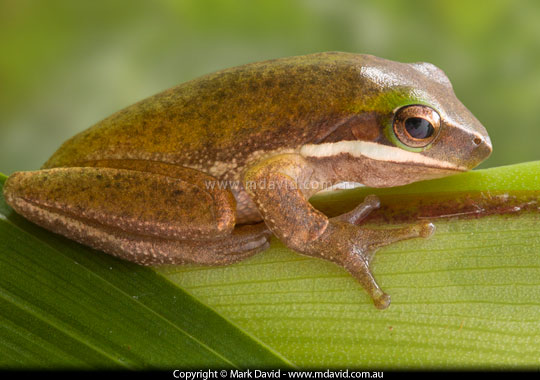
Eastern Dwarf Tree Frog

An Eastern Dwarf Tree Frog, Litoria fallax. Fully grown they are about an inch long. This one was only half that. Photographed in south-east Queensland.     RETURN TO HOME PAGE

Photo 27

House Mouse

Large areas of Australia have been experiencing a particularly bad mouse plague lately. This one was running around the edge of a house in the middle of the day, in south-east Queensland     RETURN TO HOME PAGE

Photo 26

Cane Toad

This photo shows about as much of a smile as you’ll ever see on a Cane Toad (Bufo marinus).

Cane Toads are an invasive pest species deliberately introduced to Australia in a botched attempt to control a critter called the Greyback Beetle. You see, the larvae of Greyback Beetles were munching their way through sugar cane, much to the disappointment of the farmers, and so it was assumed that a giant toad with a voracious and undiscerning appetite would eat the larvae and solve everyone’s problems. Unfortunately, in their enthusiasm to release the toads, people failed to appreciate the fact that Cane Toads can’t climb and they can’t fly. Instead, they spend their entire lives on the ground or in water. And so the Cane Toads weren’t able to get up to the top of the sugar cane plants where the beetle larvae were.

Years later, we are now faced with a problem of how to control the Cane Toads. Even as I type this, the toads continue to spread across northern Australia, along the way proving themselves to be ineffective at killing Greyback Beetles, but mighty efficient at killing the native wildflife, both large and small. They eat the little critters like frogs and invertebrates, and poison released from sacks on their backs kills any predator that tries to swallow the toads whole.

By the way, if you want to know the humane method for killing Cane Toads you can find it here on the RSPCA’s website.     RETURN TO HOME PAGE

Photo 25

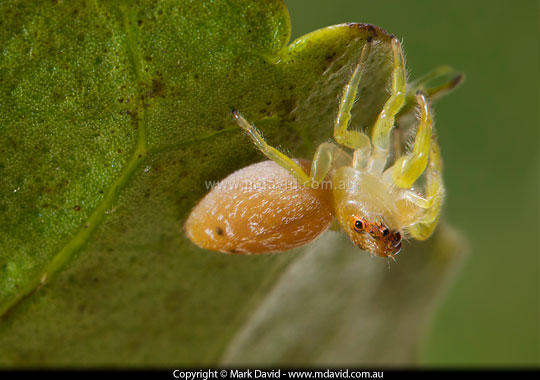
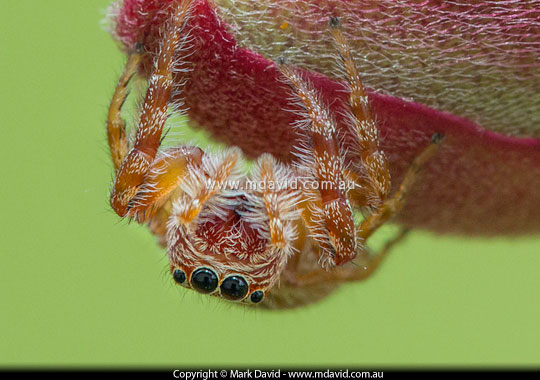
Jumping Spider

Okay, I know I’m leaning a lot towards jumping spiders in this section but seriously, what’s not to love about them?     RETURN TO HOME PAGE

Photo 24

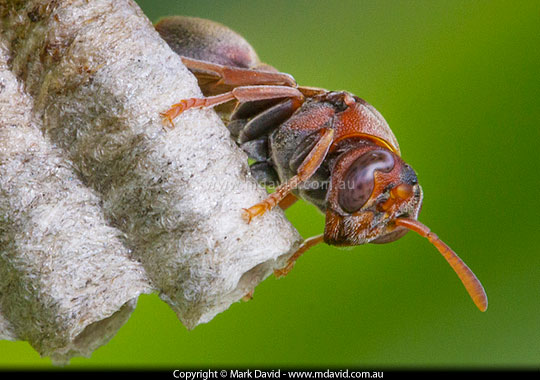
European Wasp

Up close and personal with a European Wasp
RETURN TO HOME PAGE

Photo 23

Gecko

An Asian House Gecko pauses on a sheet of paper. These lizards are an introduced species in Australia, probably accidentally brought into the country as stowaways inside shipping crates. For such a little lizard they make a remarkably loud call, often described as a ‘chuck, chuck, chuck’ sound. They can also run, fast, up smooth surfaces like bare walls and glass windows. As they scamper up a wall you might hear a very distinctive padding sound as large numbers of microscopic structures under their feet grip and then release from the surface at high speed. They feed on insects and spiders.       RETURN TO HOME PAGE

Photo 22

Lynx Spider

A Lynx spider, photographed in happier times than those depicted last week       RETURN TO HOME PAGE

Photo 21

Jumping spider feeding on a Lynx Spider

A jumping spider feeding on a Lynx Spider. Both types of spiders use speed, agility and excellent eyesight (for a spider) to capture their prey. Photographed in south-east Queensland.       RETURN TO HOME PAGE

Photo 20

Australian Raven

An Australian Raven (Corvus coronoides) demonstrating poor oral hygiene after feasting on some carrion. Photographed in Sydney, NSW.       RETURN TO HOME PAGE

Photo 19

Tree Frog

It can run but it can’t hide. This tree frog is working hard to avoid being noticed, by squeezing itself into a corner on a wall. Photographed in south-east Queensland       RETURN TO HOME PAGE

Photo 18

birds chasing other birds

Last week I ran a photo of a Noisy Friarbird chasing a Crow. This week it’s more bird chases between different bird species. And again, it’s the smaller birds chasing the larger ones. Birds which are known to sometimes prey on young birds are often chased away by the parents although sometimes small birds chase and harass larger birds that posed no threat at all. Clockwise from left: Torresian Crow (Corvus orru) chasing a Brahminy Kite (Haliastur indus); Willy Wagtail (Rhipidura leucophrys) harassing an Australian Raven (Corvus coronoides); Masked Lapwing (Vanellus miles novaehollandiae) chasing a Brahminy Kite       RETURN TO HOME PAGE

Photo 17

Noisy Friarbird chasing a Torresian Crow

A Noisy Friarbird (Philemon corniculatus) in hot pursuit of a Torresian Crow (Corvus orru) in south-east Queensland     RETURN TO HOME PAGE

Photo 16

Dragon lizard

There be dragons — or at least, one really little one. This fellow is a very young dragon lizard and it was small enough to require my macro lens to capture this portrait. Its full length was only about 28 cm long and more than two thirds of that was tail. There are 70 species of dragons known in Australia, which is about 70 more than I can identify with any accuracy.     RETURN TO HOME PAGE

Photo 15

Anemone Stinkhorn

Some weeks back I had a pic of a Latticed Stinkhorn. The charmingly named stinkhorns are a type of fungus that uses the smell of rotting meat — or worse — to attract flies in order to spread spores. Here’s another stinkhorn. This one is an Anemone Stinkhorn. If you look carefully you’ll see a fly at the base of one of its ‘arms’, which will give you an impression of size.     RETURN TO HOME PAGE

Photo 14

Freshwater Turtle

This freshwater turtle gave me a good opportunity to take some close-up portrait photos after I rescued it from a dog. There are lots of different types of freshwater turtles in Australia, with 26 species identified and named by scientists. We used to call them tortoises, but now the word tortoise is normally reserved for the land-dwelling ‘true’ tortoises of other regions.    RETURN TO HOME PAGE

Photo 13

Tree frog

Another tree frog this week. I’m not great at identifying frogs but my guess is this was a Peron’s Tree Frog (Litoria peronii). You’ve got to admire the camouflage in a creature like this. Even the eyes are covered in a pattern that allows it to blend unnoticed into its background. Peron’s Tree Frog is one type of frog that is able to quickly change colour.    RETURN TO HOME PAGE

Photo 12

Jumping spiders in a retreat

A pair of jumping spiders, probably Opisthoncus species, peers out from a silky retreat. The males and females of many kinds of spiders can look so different as to be easily confused for being different species.    RETURN TO HOME PAGE

Photo 11

Stages in the life of an Assassin Bug

Looking like something from a science fiction movie, a tiny Assassin Bug hatches out of its egg. Once the bug has fully emerged, its exoskeleton will harden and go black and the bug will look like the ant-sized creature in the top-right inset. Middle-right shows the bug half-grown, and lower-right shows the adult bug. Assassin Bugs feed on other invertebrates by piercing them with a long, sharp mouthpart, and then sucking the creature’s juices out.    RETURN TO HOME PAGE

Photo 10

Wolf Spider with young

Last week I showed a picture of a Wolf Spider carrying her egg sac on her spinnerets. This week it’s another Wolf Spider, except this time it’s after the young have emerged. Those little guys will spend their first days clinging to their mum’s abdomen like that while she gets on with her life hunting and feeding    RETURN TO HOME PAGE

Photo 9

Wolf spider with egg sac

How does an active mum take care of a whole nursery full of kids? She takes it with her. This Wolf Spider carries her egg sac by attaching it to her spinnerets. When the young hatch, they will spend the first days of their lives hitching a ride on her abdomen    RETURN TO HOME PAGE

Photo 8

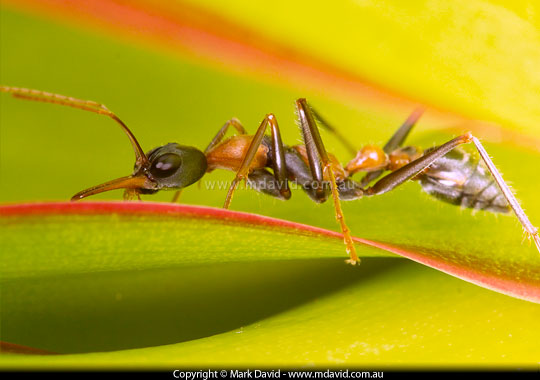
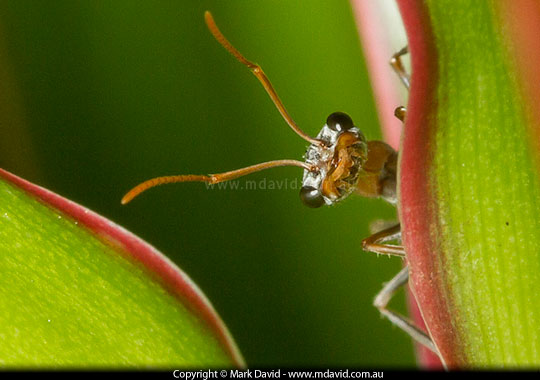
Bulldog ant

The formidable mandibles on a Bulldog Ant are just one part of the weaponry in this insect. At the other end there is an even more formidable sting capable of repeatedly injecting venom. Bulldog Ants are large, primitive and known for their aggresssion. Some types reach lengths of well over an inch and almost all are indigenous to Australia    RETURN TO HOME PAGE

Photo 7

Stinkhorn fungus

Looking like a cross between an octopus and a bird cage, this fungus, possibly a Latticed Stinkhorn, sits on a bed of damp mulch in south-east Queensland. Stinkhorns smell like either rotting meat or dung. While this might not endear them to people it sure makes them attractive to flies. Those flies then pass the spores on to other stinkhorns.    RETURN TO HOME PAGE

Photo 6

Beetle mouthparts

The bits that bite: the impressive multiple mouthparts seen in this underneath view of a large beetle reveal how it would make quick work of its likely diet of worms. This beetle measured almost 3 inches long and didn’t seem too happy while I took this photo    RETURN TO HOME PAGE

Photo 5

Tree Frog

Tree frog photographed in south-east Queensland    RETURN TO HOME PAGE

Photo 4

Tree Frog

An Eastern Dwarf Tree Frog, Litoria fallax, less than an inch long, sits hunched up on a leaf in south-east Queensland     RETURN TO HOME PAGE

Photo 3

Wolf Spider

Wolf Spider’s view of a Wolf Spider    RETURN TO HOME PAGE

Photo 2

Jumping Spider

With colouring that would make a parrot proud, this Northern Green Jumping Spider, Mopsus mormon, gives a good idea why jumping spiders have earned their reputation as some of the world’s most beautiful arachnids. This one was photographed in south-east Queensland. Northern Green Jumping Spiders are the largest jumping spiders in Australia and are unusual among jumping spiders because they are capable of delivering a painful bite.    RETURN TO HOME PAGE

Photo 1

Masked Lapwings

A Masked Lapwing chick finds shelter, warmth — and a mighty good hiding place — in its parent’s feathers as it prepares for a night on a suburban lawn.    RETURN TO HOME PAGE

People need nature more than	 nature needs people
Nature Stuff

So what’s with this Nature Stuff then?

Birds

Plants

Insects and spiders

Reptiles

Nature words

Other stuff


Copyright © Mark David. All rights reserved