
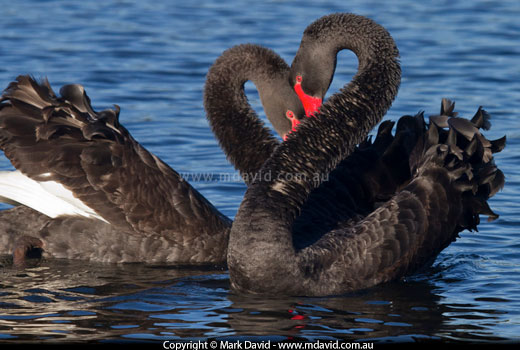
Two Black Swans posturing on a Sydney pond.
These big birds are familiar to most Australians. What might be surprising is that they’re vegetarians, eating water plants like algae and weeds. The swan will plunge its head into the water to grab a beak-full, and that’s where that long neck comes in handy. It allows it to reach deeper into the water than most other birds. Occasionally these birds will graze on pastures. I sometimes see them nibbling on grass.
Baby swans are called cygnets, from the Latin word for swan, cygnus. These little guys, shown below in different levels of development, won’t start getting their bill and eye colouring until they’re about 2 months old. By the time they’re 18 months old they can breed.
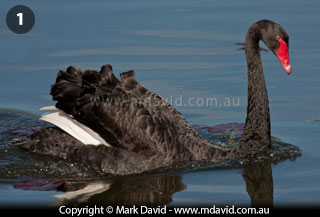
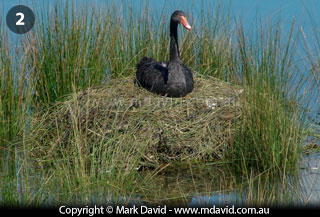
1: The Black Swan (Cygnus atratus) is protected under the Australian National Parks and Wildlife Act, 1974 2: A Black Swan on its nest
The Black Swan’s nest is a mound of whatever it can find in the area, mainly sticks and leaves. Both parents build the nest and its size depends on how much stuff the birds can find. They lay up to about ten eggs and, despite claims to the contrary in the story of The Ugly Duckling, the young are seriously cute. The young are able to swim soon after hatching and the family will stay together for about nine months.
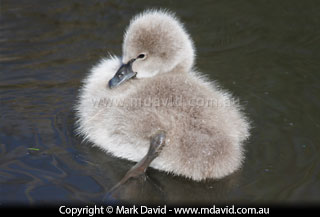
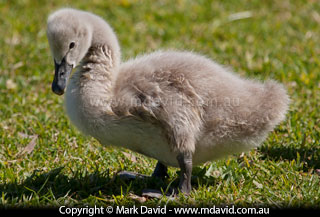
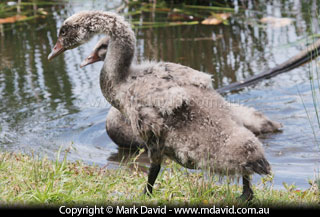
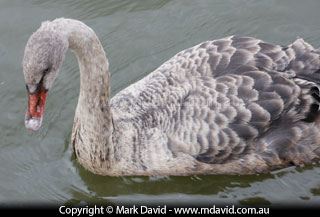
Black Swan cygnets growing up fast. These birds are easy to identify as young Black Swans because they are never far from their parents.
In New Zealand there was a type of swan that was hunted to extinction. The Black Swan has been introduced there and is now doing so well that control measures have been necessary to prevent the birds from causing a nuisance to local species. Black Swans have also been introduced in Sweden.
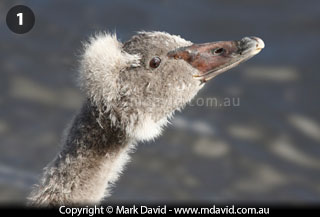
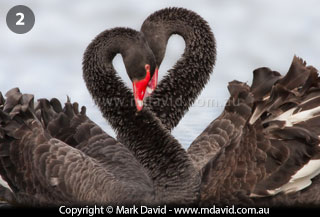
1: Although swans are a very regal looking bird, they do go through a stage when they’re growing up when you might think otherwise. 2: While the necks of two Black Swans form a heart shape there is no love felt between the birds. These mature swans, probably rival males, are facing off in a show of size and strength. These kinds of confrontations happen a lot but they rarely develop into much more than a bit of posturing.
Most swans breed before they’re three years old. The older birds stay with the one partner for life. If you see a breeding pair of swans then chances are that the big one is the male.

Copyright © Mark David. All rights reserved


