
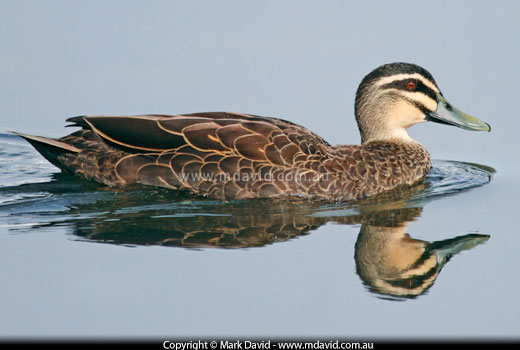
Pacific Black Duck paddling on the calm waters of a Sydney pond
Anas superciliosa
A really common duck. When I watch people feeding a bunch of them I often find at least
one duck that could use a course in anger management — chasing the others with its head
down. Their natural diet is aquatic seeds and small aquatic creatures. Their unnatural diet is bread, which they’ll
eagerly take but which is no good for them. Their love of aquatic seeds does not endear
them to rice farmers. More info here.
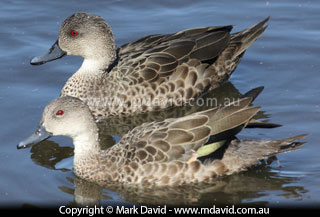
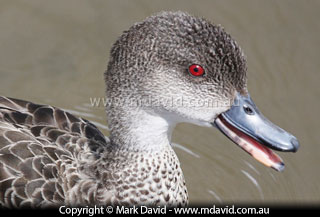
Anas gracilis
The white throat feathers make me think these birds are Grey Teals, but I might be wrong and
these pics could be of Chestnut Teals. The Grey Teal (or Chestnut Teal) could look like
a Pacific Black Duck at first glance until you notice the stripe through the eye is
missing, and speaking of the eye, notice the beautiful red colour, which is a feature
of these birds.
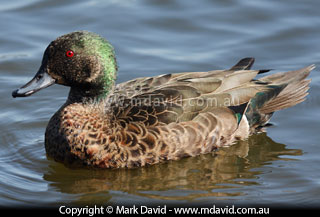
Anas castanea
You might be wondering how on earth I could confuse this bird with the Grey Teal mentioned
above. Because this is the male Chestnut Teal. The females look pretty much like
a Grey Teal except with slightly darker colouration.
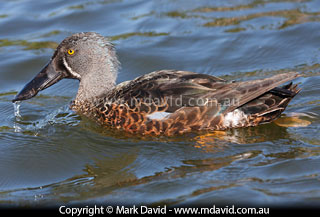
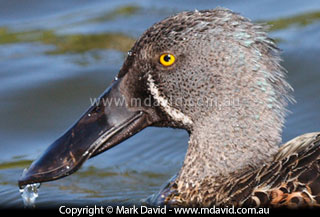
Anas rhynchotis
Looks a bit like the Chestnut Teal until you notice that beak. These birds have some
serious beaks. The bird in this shot is a male. The female also has the serious beak
but has colouring similar to the female teals.
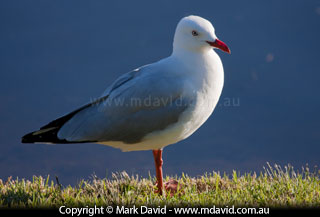
Larus novaehollandiae
No self-respecting guide to Sydney water birds could go without these guys. This is the
seagull you’re most likely to see, especially if you’re trying to mind your own
business on the beach with some fish and chips. It hangs around beaches, parks and rubbish
dumps. This is one very adaptable critter. Did you know there are more of them in Australia
now than before Europeans arrived? Strange, but true.
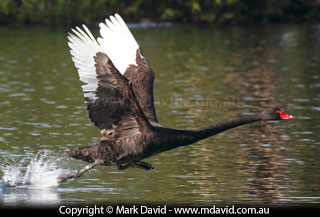
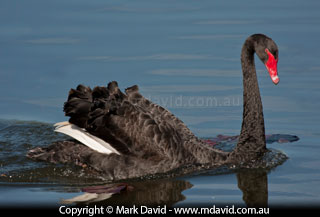
Cygnus atratus
An impressive, very large bird. These guys are ready to breed when they’re only
18 months old. Old birds tend to form permanent pairs, while the younger birds will form
temporary bonds. (Typical youth!) The babies (called cygnets) are seriously cute: fluffy,
downy, light grey. They develop light brown feathers after about 3 weeks. Both parents
look after the eggs and both care for the young. More information
here.
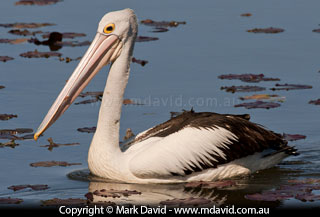
Pelecanus conspicillatus
A really big bird seen in most parts of Australia. The biggest flocks of these guys
I’ve seen were in inland Australia, where they congregrate in flooded areas to
breed, but when things are dry inland they hang around the coastal areas, near fresh
or salt water. Fossil evidence shows that they’ve been here, mostly unchanged,
for 30-40 million years. They appear as beautiful and graceful in the air; then go
and wreck everything by appearing awkward and clumsy on land. They eat fish and are
really good at catching them. More info here.
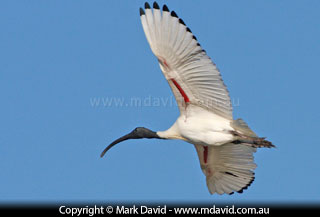
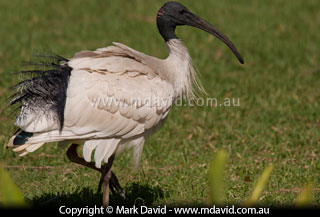
Threskiornis molucca
Common around parks and rubbish tips, these are large birds which, through no fault
of their own, can sometimes require intervention by human wildlife experts to prevent them from breeding too much and becoming a pest.
They eat mussels, crustaceans, water insects, fish, snails, frogs and
pretty much anything you want to eat too. They also love to pick around rubbish.
Sometimes they can be cheeky, grabbing food from children or jabbing people with
their long beaks. Feeding these birds encourages that kind of thing. More info
here.
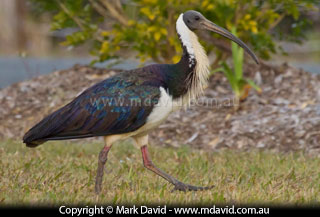
Threskiornis spinicollis
It looks like an Australian White Ibis (same size, shape and that face which only
an ibis could love) except the plumage along its back and wings is dark
and often sparkling with an iridescent sheen. These guys feast on insects and especially
enjoy grasshoppers and locusts. Having seen locust plagues I therefore appreciate
these birds all the more, except of course it takes a whole lot more than a
Straw-necked Ibis to control a locust plague.
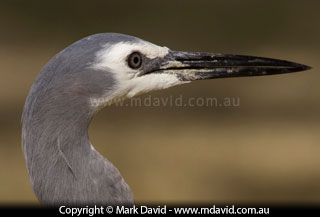
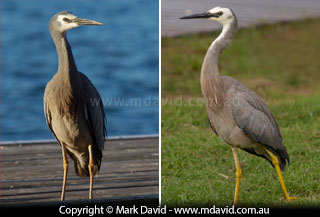
Egretta novaehollandiae
This is the most commonly seen heron in Australia. You can find them all over the
continent. You’ll often spot one or two walking around looking for food in
grasslands and especially near water. They’ll eat crustaceans, fish, frogs,
insects and even mice. They have a really cool way of flying, with their neck folded,
head close to the body and legs extended and trailing. They can breed at any time of
the year.
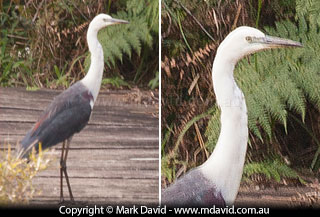
Ardea pacifica
While I see the White-faced Heron a lot, I hardly ever see the White-necked ones. Which is
why I only have this pretty bad photo, but this will at least reveal enough about what they
look like so you won’t get them confused. These guys can be spotted around most of mainland Australia.

Copyright © Mark David. All rights reserved


