
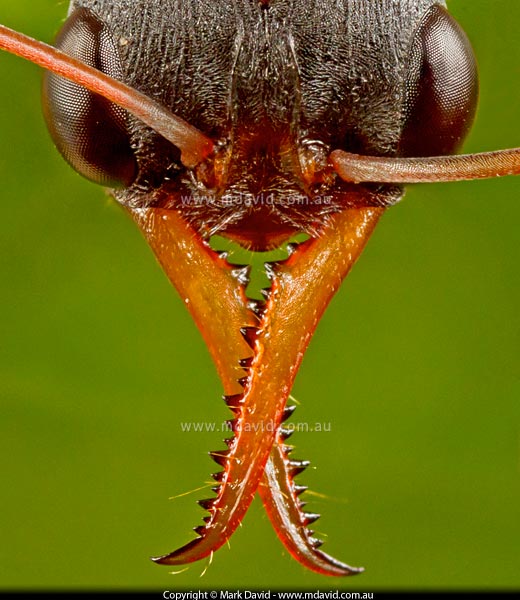
The impressive mandibles of these ants form the least concerning part part of their weaponry. This one is a Jumper Ant.
Bulldog Ants (also known as Bull Ants) and Jumper Ants are a group of large, primitive ants from the genus Myrmecia. I must admit I don’t much like them, but I do admire and certainly respect them.
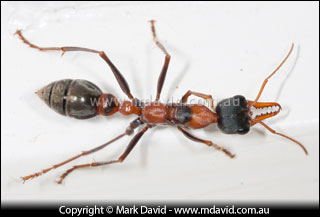
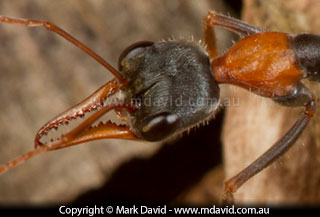
Jumper Ants
I don’t know about all Bull Ants, but the Jumper Ants can definitely jump. I’ve watched them jump from leaf to leaf in trees. The ant stands on the edge of one leaf and sways from side as it appears to judge the distance and angle and then it leaps about 2 inches to the next leaf. They will also jump a lot when they’re agitated.
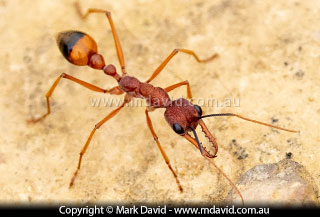
Bulldog Ant
Absolutely. These ants are famous for their aggression. With their excellent eyesight they will follow movement, even if the subject is much bigger than themselves. A few times I’ve had Bull Ants try to chase me for a short distance. People reluctant to get too close will be pleased to know it’s not difficult to outrun them.
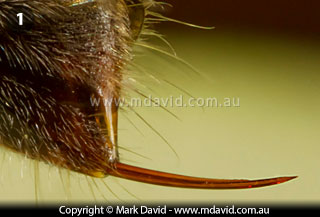
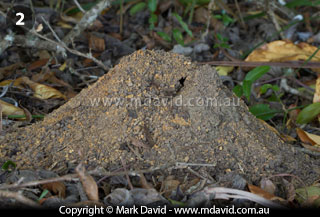
1: The bit you want to avoid: the stinger on this Jumper Ant injects venom. 2: The entrance to a Jumper Ant nest. While the nest is underground, its location is usually revealed by an entrance mound like this one. The ants will actively defend their nests and can leap out in great numbers when you disturb them.
Absolutely. I’ve been stung by them and I am telling you right now that it hurts. A lot. I will add that some people who are allergic to stings can suffer anaphylactic shock from the stings so it can be very serious or even life-threatening in those instances, especially since it is common to be stung repeatedly by lots of ants. Now I will point out that it’s not the formidable mandibles which I am talking about, but a stinger in the abdomen which they use to inject venom. The ants are aggressive enough on their own but when you get too close to their nest they are even more likely to go for you, pouring out of their nest like a miniature erupting volcano.
You’d expect a creature with the attitude and athleticism of these ants to chase cars and swallow the occupants whole but in fact their diet is much less exciting. They eat sweet stuff like honeydew, seeds, fruit and nectar. They do, however, catch grubs and insect prey to take back to their nest for the young to feed on.
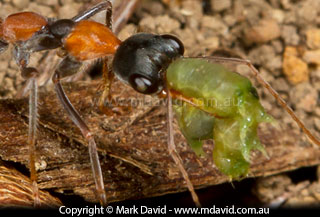
A worker Jumper Ant carries a tiny caterpillar back to the nest to feed to the young
Big (for an ant). Jumper Ants grow to as long as 15mm, which I reckon is big enough for any kind of ant, but the Bull Ants grow to the really impressive sizes of up to 40 mm in length, making them one of the world’s longest ants.
You probably already know that many arthropods were bigger back in the fossil eras. Bull Ants and Jumper Ants have retained some of that size. But that’s not the only thing primitive about them. They are directly descended from ancient ants that existed before the arrival of other, more modern ants that developed the ability to walk in trails. Which is why you never see a trail of Bull Ants. They always hunt on their own.
Throughout Australia. If you’re an Aussie then chances are you’ve seen them. The Jumper Ants exist only in Eastern Australia.


Copyright © Mark David. All rights reserved


