
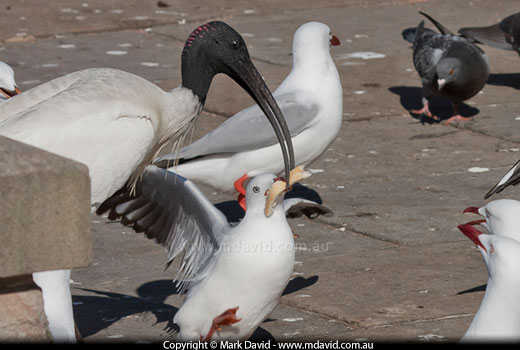
An Australian White Ibis and Silver Gull fight over a scrap of bread.
I’m not a big fan of feeding wild animals, including birds, for a whole bunch of reasons. But I don’t think it has to always be a bad thing either, and in some cases and handled the right way it can be helpful. Here are a few things you might want to think about if, like many people, you like giving food to wild critters.
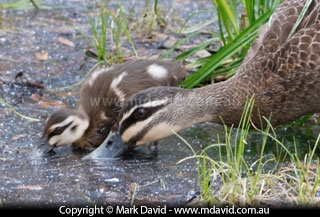
I’ll start with a nice picture of the duck and its offspring feeding on wild seed. Cute eh? It sure looks peaceful to me.
Seed-eating birds feeding in the wild are usually peaceful. This kind of activity, where the animals search for food in wild, rewards intelligence — the smartest ducks find the most food.
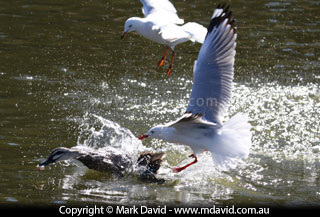
Now compare it with the next picture showing the duck breaking water speed records while it’s pursued by a pair of seagulls. It’s the same species of duck, but someone has thrown some bread into the pond (no, it wasn’t me). The duck got to it first but those Silver Gulls don’t play nice. It’s a good thing that cute duckling isn’t in the middle of this.
This kind of feeding rewards the fastest and most aggressive individuals and is stressful for all the birds involved.
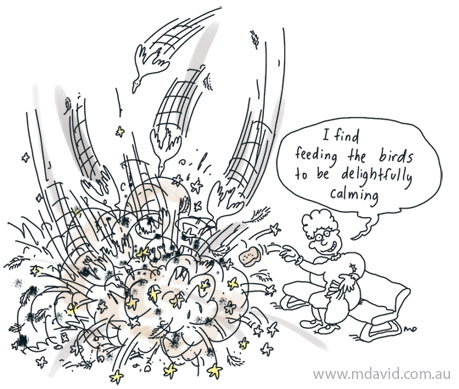
So while finding food in the wild can reward intelligence in birds, feeding them scraps of bread rewards aggression, because the most aggressive birds are the ones that snatch the most. It can also cause animals to turn on each other to chase the less dominant ones away. And it diminishes their natural tendency to be wary of people.
I remember trying to eat some fish and chips at Watsons Bay on Sydney Harbour one day. The seagulls were clearly so used to being fed by tourists that they swarmed over my table and I had to constantly push them away. It was actually difficult to eat my food. The birds were flying in and trying to grab it from my fingers and mouth and I got a pretty good idea of how that duck felt in the picture above. So while it might be unpleasant having to fend off a bunch of seagulls from my meal, imagine if they were creatures capable of a dangerous bite! For example, I’ve read about dingos becoming bold and even aggressive to children after years of being fed by tourists.
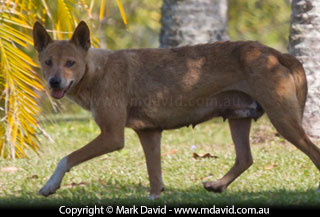
In some places, wild dingos have become so emboldened by being fed that that they have attacked people.
So you can see how sometimes it’s a good thing that people and other animals go about their ways independent of each other. As a nature freak I love seeing animals up close, but not that close.
Bread is good food for humans. But could you imagine what it would be like if bread was the only thing you ate?
Feeding bread to wild birds fills them up so much they no longer bother seeking out the things they need for a balanced diet. That’s making some birds sick.
A similar situation involves feeding sugary water to lorikeets. That might make you popular with the lorikeets but it’s not healthy for them. It’s like giving your kids nothing but cake for dinner. The lorikeets would be missing out on the balanced diet they’d get when feeding in the wild. This kind of unbalanced diet can also cause deformities in the chicks of some wild birds.
In the wild, birds eat all sorts of stuff, including seeds, insects and nectar, and even pollen. It makes up a complex diet which bread on its own just can’t match. Feeding them bread is like filling them up with junk food. If you do want to feed birds, then you’re probably better off finding some commercial bird feed created for the kinds of species you are dealing with.
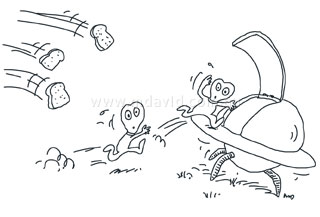
Seriously, what is it about bread? People throw it at everything that moves. In fact my theory is that this planet was once visited by aliens, but when they climbed out of their spaceships to spread peace and advanced technology to humans, they had to flee to avoid being pelted by small pieces of bread.
Well okay, so I don’t really believe that theory. But I do wonder sometimes about why people think so many animals benefit from the stuff.
It’s true that the eagerness with which animals take bread is only matched by the eagerness with which people hurl it at them. But some animals like kangaroos and wallabies can be made sick from eating bread. In fact, in some cases, wallabies and kangaroos can die from eating bread (more about this in part 2), even though they seem to like the stuff!
This is one of those things which should really be handled intelligently. Apart from the fact that it can encourage aggression, many seed-eating birds will often pick out just the types of seed they like and leave the ones they don’t. They can leave an awful mess which can attract rats and mice. Now, when I talk about this, I’m not talking about the practice of leaving a small amount of seed outside for the birds occasionally. I would think that can’t be all that bad. What I’m talking about here is the practice of regularly filling them up with seed.
When animals crowd around feeding stations they might more easily catch diseases from each other. Discarded food, husks etc can also be reservoirs for pathogens. For this reason, it’s good practice to regularly clean feeding stations.
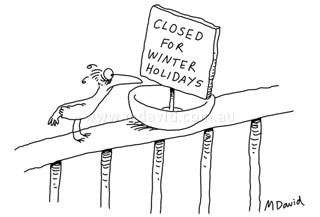
Let’s imagine that you did a whole lot of research and somehow managed to perfectly duplicate the animals’ natural diet. Is that okay?
Well, it’s heaps better, but you need to be aware of some other issues here. Wild animals can become dependent on regular feedings from people and lose their ability to feed themselves in the wild. Birds used to being fed can starve while the humans go away on holidays. It’s better to allow wildlife to maintain an ability to look after themselves.
I was recently told about something that happened to a Little Penguin. Little Penguins are small penguins found in New Zealand and southern Australia. They feed on small fish, which they catch during long hours swimming in the cold southern waters.
A penguin researcher found a specimen that had come onto land to moult. During moulting, Little Penguins stop eating. They shed their feathers and grow new ones, and then head back out to sea to feed again. Tourists kept harassing the vulnerable little bird by wanting to take “selfies” with it. So the parks and wildlife authorities put up a small temporary fence around it, to give it some peace.
Then some fishermen started throwing fish near the penguin. I can understand why they did that. They wanted to feed a penguin, which does, after all, have a fish diet. But they didn’t know that moulting penguins don’t eat. Then some clown, with no consideration even for the bird’s normal diet, left some Christmas cake for it to eat. So we’ve established that moulting penguins don’t eat and they certainly never eat Christmas cake. But soon we had a vulnerable flightless bird huddled onshore and surrounded by dead fish and cake. The mess attracted a huge swarm of ants. The ants swarmed all over the distressed bird too and wildlife officers had to stage a rescue of the bird. This is an example of people causing stress and danger to a wild animal because they want to feed it. It’s another example of ignorance leading to a creature being put at risk.
One of the best things you can do is plant a wildlife-friendly garden. Indigenous flowering bushes attract nectar-eating birds and if you include some dense shrubs too then that will provide cover for the smaller species. Plants that attract insects will also attract the wildlife that eats those insects. Adding species of local plants to your garden will make your garden into something of a wildlife corridor. So you’ll get to see plenty of wild birds passing through and feeding in your garden. Even better, when you go on holidays the plants will continue to provide a resource for the wildlife during your absence.
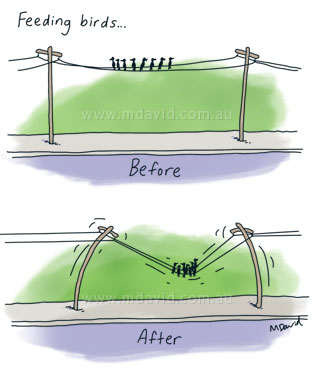
Having said a whole lot of stuff that casts a bad light on feeding wildlife, I think it’s important to consider those times when it’s not so bad at all.
I believe that if you feed small amounts of the correct types of food to animals, in a way that does not lead to aggression or dependence, then it can’t be too bad. I’ve heard many stories about people researching the right kinds of foods and then being smart about it when they feed the critters.
Yeah, I know I sound like I’m contradicting everything I’ve written earlier. But it really just comes down to thinking about the effect of your actions on animals. In some situations I would never feed a wild animal. For example, in places where there are signs urging us not to. Chances are, when you see one of those signs then someone has come across some pretty good reasons for it, perhaps including some of the things I’ve mentioned.
I also know from personal experience that no matter how ‘pure’ you try to be about this business, sometimes you find yourself feeding wild animals anyway. For example, when I recently tried to grow a crop of tomatoes, the wallabies took bites out of every one. Which meant that I was unintentionally feeding the wildlife. So I don’t want to be too pedantic or narrow-minded in my approach to this subject.
And then there are the times, like after a bush fire, when artificially providing the right kinds of food for animals can give them a better chance of survival until their regular food sources come back. It could be argued that this is the most beneficial time for feeding wildlife, providing it is done properly.
So I just think it comes down to the situation where the more you think and learn about wildlife the more likely it is that you can share their world in a positive (non-destructive) way. Feeding wild animals can be a great way to enjoy their company. And if you do it in a way that’s well considered, then I think no one, people or critters, need be any worse off for the experience.

Copyright © Mark David. All rights reserved


