Nature Stuff www.mdavid.com.au
Nature Stuff Return to home page

Common water birds around Sydney — PART 3

Pied Cormorant Chick A Pied Cormorant chick in its nest

Musk Duck

Musk Duck

Biziura lobata
One strange-looking duck, this one. First of all, it often swims half-submerged. Second, the male has a large lobe of skin hanging under its bill. It distends it during courtship to look attractive to the female. Beauty in the eye of the beholder, I suppose. If you should ever find yourself close enough to one, you’ll notice that the lobe has a strong musky smell. Thus the name. During courtship the male splashes water behind it during an impressive, noisy display. Sydney is unlikely to see this because it’s apparently outside of its breeding range.

divider

Hardhead

Hardhead

Aythya australis
If it strikes you as being cruel to label this critter a ‘Hardhead’ then ‘White-eyed duck’ should also do it. Speaking of white eyes, the males have them while the females have brown eyes. Hardheads are good swimmers, both on the water and diving into it. They eat mainly water plants but also some critters like aquatic beetles and yabbies.

divider

Masked Lapwing

Masked Lapwing

Vanellus miles
These critters used to be called Spur-winged Plovers but their name was changed to stop confusing them with the Spur-winged Plovers of the northern hemisphere (a different species). Like their (old) name suggests, they have a claw-like spur on each of their wings. You can see them on the photo far left. They have a loud call which can sometimes be heard as they fly overhead at night. They hang around in places like parks and grassy areas where they feed on insects. These birds build a nest on the ground and defend their young by swooping at anything that comes close.

divider

Black Cormorant

Black Cormorant

Phalacrocorax carbo
The largest in its family, these birds are big, funky-looking creatures. When stretched out in flight their lower body takes on an almost feline appearance. They are really good at swimming underwater and very good at catching fish too (which, of course, they eat)

divider

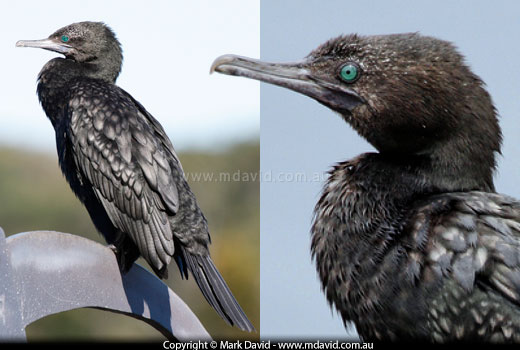
Little Black Cormorant

Little Black Cormorant

Phalacrocorax sulcirostris
You can distinguish these from the Black Cormorant by being smaller, and having a back face. They feed on fish and I sometimes see them fishing in large groups. I’ve read about them rounding up fish that way and it’s kind of fun watching a whole lot of these birds diving under water together and then surfacing together some time later
divider

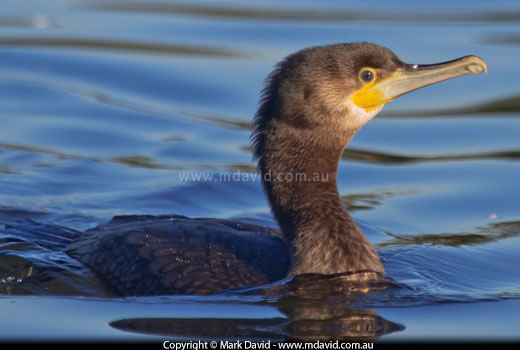
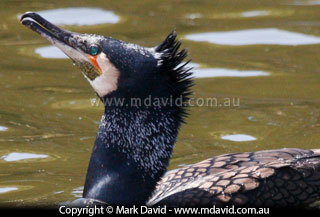
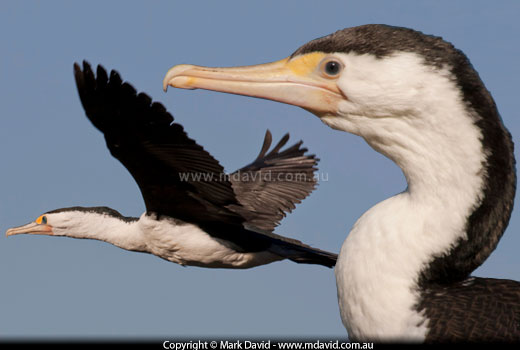
Pied Cormorant

Pied Cormorant

Phalacrocorax varius
Like the Black and Little Black, the Pied Cormorant feeds on fish, but will also take the odd crustacean. Its nest is a mass of dried twigs and other leaf material - I always seem to see the nests in dead trees but apparently they might be built on other surfaces as well. These birds can breed whenever the food supply is good enough
divider

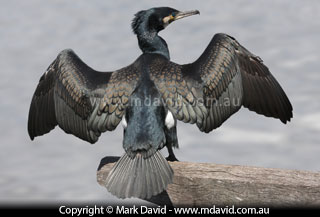
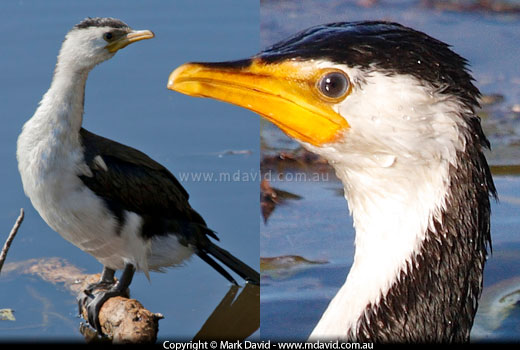
Little Pied Cormorant

Little Pied Cormorant

Phalacrocorax melanoleucos
Like their name suggests, these guys are smaller than the Pied Cormorant. They’re a common bird, happy to feed on fish and crustaceans. After swimming, they’ll often stand in a nice safe spot in the sun with their wings spread out to dry.
divider

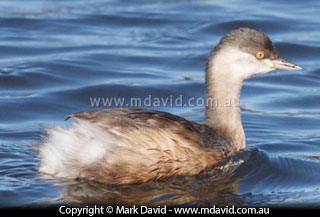
Grebe

Grebe

These pics could be of either a Hoary-headed Glebe (Poliocephalus poliocephalus) or an Australasian Grebe (Tachybaptus novaehollandiae). Outside of their breeding plumage it’s a bit tricky telling them apart, although my guess is this one is an Australasian Grebe. At a distance they could be mistaken for a small duck. These guys will often dive underwater when something scares them

divider

PAGE 1 | 2 | 3


People need nature more than nature needs people

 
navigation

Nature Stuff

Birds

Trees

Reptiles


Insects and spiders

Other stuff