Photography mdavid.com.au

Digital SLR photography — The easiest way to get better wildlife photos

Published October 18, 2011

I mention this a few times throughout these photography guides, but I’m devoting a whole page to it this time because it’s worth stressing and it’s also such an easy thing to do. I’m talking about just getting down to the subject’s eye level to take your shots.

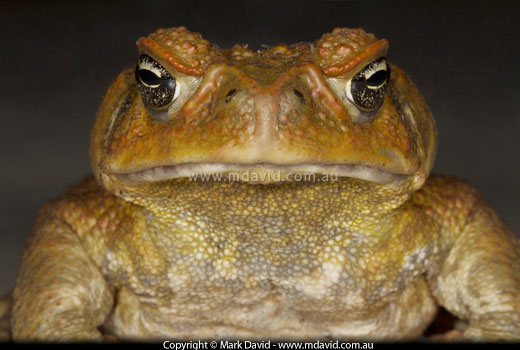
Cane Toad

Lying on the ground in front of this Cane Toad allowed me to get a more interesting shot.

I’m amazed when I watch most people takes photos of small animals. 90% of the time (that statistic is now on the internet so hey, it must be true!) people will walk up to the animal, point their camera down to it and take a shot of the top of its head. I must admit that I used to do that too. I’d be so happy to have an interesting critter in the viewfinder that I’d forget to take an interesting photo. Or in other words, I’d forget to think like a photographer.
As humans, we are very familiar with certain ways of seeing animals. For example, we are used to looking down on a pigeon walking along the ground, or looking up at one flying overhead. So it’s going to be much more difficult to get fresh, original shots of pigeons if we take them from those angles.

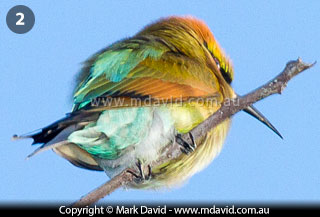
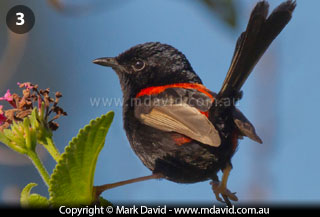
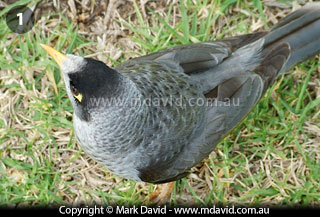
Most photos of birds are taken from above or below.

Most bird photos are taken from above or from below, with the result being a bunch of boring shots. Meeting them at their eye level, as I did in the third photo above, provides a much more engaging shot. From left to right: Noisy Miner, Rainbow Bee-eater, Red-backed Fairy-wren.

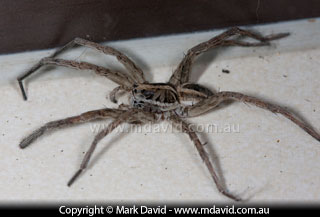
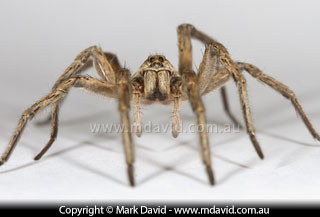
Wolf Spiders

Even some of the smaller creatures can be photographed at eye level, as you’ll see when you compare these photos of Wolf Spiders. However you should obviously take special care when working with venomous creatures.
Dragonfly

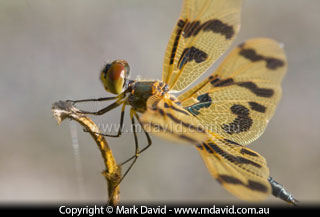
I chose an eye-level angle for this dragonfly photo (above).

dragonfly

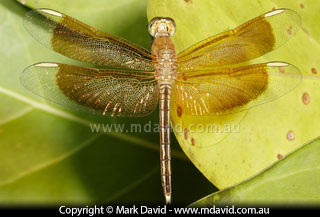
Eye level is a great angle for wildlife shots, but don’t feel like you have to go eye-level every time. In this example I wanted the photo to show off the dragonfly’s wing colour, so I aimed straight down onto it.

By getting down onto your knees or even lying down in front of an animal a few things happen:

Does this mean animal photos should only be taken from their eye level?

No, of course not. I certainly don’t want to be giving you rules on how you’re supposed to take all your shots. And, quite often the occasion will dictate that a much better angle can be used. The important thing is that you let the unique situation surrounding each shot decide which is the best angle instead of letting old habits or laziness make the choice for you. But if you’re in a hurry, then the good old ‘eye-level’ trick is certainly a very handy one to get interesting and engaging wildlife shots.

Photography

Beginners’ series on digital SLR photography

The essential basics

Digital SLR photography — a beginners’ guide
A quick guide to understanding your new toy

Learning from examples
Picking up where the first article left off

Understanding aperture
This is one of the fundamental tools for controlling exposure.

Understanding shutter speed
This is another of the fundamental tools for controlling exposure.


Making sense of technical stuff

Megapixels
How many is enough?

How much camera gear do you need?
Sometimes, less really is more

How to choose a lens
Making the right choices can improve your shots and save you money

newTips for using tripods
Getting the most out of them

JPG versus RAW
Which is the best way to work?

Understanding histograms
Making sense of this handy tool

APS-C vs full frame
The differences explained, and what it means to your photography

Pixel density in sensors
Helping APS-C cameras photograph distant objects.

Fast lens, slow lens
What’s the difference?

Understanding colour temperature
It doesn’t have to be complicated.

Understanding resolution
What it means, as it applies to digital photography


Photography words explained

What’s a 100% crop?
I explain a term you often hear in digital photography

newWhat are specular highlights?
You’ll recognise them when you see them

newWhat is bracketing?
A commonly-used word for a handy trick


Photography at night

Photographing small critters
in the dark

How I take my shots when there’s no light

newTaking pictures of the moon
You need a fairly long lens, and these simple tricks

Common problems and their solutions

Washed-out colours in photos
Why it happens, and how to prevent it

Understanding exposure compensation
Why your photo subject can look so badly exposed, and what to do about it

Understanding dynamic range
Dealing with too much contrast

Working in harsh light
Getting some of the colour back into midday photography

Getting sharper pictures
Understanding the things that stop your photos from being tack-sharp

Noise in your images
What causes it, and what can you do about it?


Taking things further

Using a telephoto lens to blur the background
Here’s an easy-to-understand explanation of why it happens

Macro photography part 1
Using your DSLR for bug shots

Macro photography part 2
Ironing the bugs out of bug shots

One simple trick
The easiest way to get better wildlife photos

Wildlife photography
Tricks the pros use to get better pictures of critters

Bird photography part 1
Small, distant, and feathered does not have to mean a bad photo

Bird photography part 2
More hints for beginner bird photographers

How I take photos of frogs
These tiny critters require a technique all their own.

Using software to ‘fix’ your photos
A few suggestions for image editing


Advanced stuff

Image Stacking
Using software to achieve extraordinary depth of field

Sneaky deep-etching
A fast way to cut complicated objects out of their backgrounds


Other photography stuff

BLOG (sort of)

The elusive waterskiing duck
It started out as a fun idea …

PHOTO GALLERY

Pics of Australian critters
Some of my recent images

PHOTO SALES

Looking for the right picture?
A small selection of the photos available


Copyright © Mark David. All rights reserved