Photography mdavid.com.au

Digital SLR photography — Fast lens, slow lens. What’s the difference?

Photographers talk about fast lenses with the kind of reverence motoring fanatics talk about fast cars. So, what’s a fast lens? Why do photographers rave about them so much? And why do they cost so much?

Fast lens

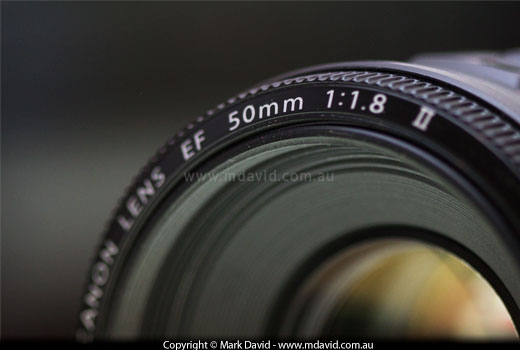
Not all fast lenses are expensive. This 50mm f/1.8 example can be bought brand new for less than two hundred dollars, whereas a fast telephoto lens (one with a long focal length) can easily set you back thousands.

A fast lens is one capable of opening up to a big aperture. For example, a lens capable of f/1.2 would be considered a very fast lens while one that can’t open up to anything bigger than f/8 would be considered slow.

Now, before I go on, if that last paragraph was confusing, then you might want to learn more about aperture and f-stops by reading the first page of my beginner’s guide to Digital SLR photography.

So why do photographers love fast lenses so much?

The most obvious reason is, because a fast lens lets in more light you can use it to take photos in darker conditions. That’s handy for wildlife photographers trying to get shots of critters running around in the dim light around sunrise or sunset. It can also allow for shorter shutter speeds, which can come in handy on a windy day, for example, when all the foliage in a scene is moving.

And because you’re able to let so much light into a fast lens, your camera doesn’t have to reach into the high ISO settings where noise is likely to happen.

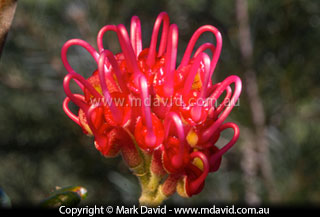
Photo taken with a small apterture features a distracting background

This photo was taken using a small aperture. The distracting background is typical of photos taken with a slow lens

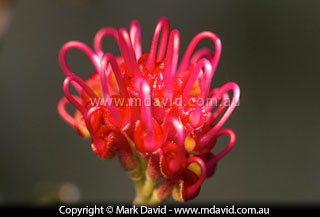
The same photo taken with a bigger aperture features a blurred background which 
	no longer distracts

Taken using a bigger aperture, the background has now become so much out of focus that it no longer draws your attention from the flower.


But there’s another advantage in fast lenses.

When you fix your eyes onto something, the object you’re looking at is in focus while everything at a different distance tends to fall out of focus. We find that to be a natural way of seeing the world and perhaps because of that, we find it pleasing if the same effect happens in a photo. Because a big aperture can reduce the depth of field in a shot, the subject can be kept sharp while the background blurs away from our attention. Because our eyes are drawn to whichever part of a photo is in sharpest focus, the subject then appears to stand out. For example, a photographer can get someone’s eyes in sharp focus while allowing the sides of the face to be slightly blurred. That effect can draw our attention to the eyes, enhance the appearance of the portrait and it can be quite flattering too.

Why are fast lenses so expensive?

The answer to this question lies in the meaning of an f-stop.

You see, the f-stop is a kind of fraction. Or if you want to be more accurate, it refers to a ratio. It’s the ratio of the aperture diameter (the width of the hole letting light into the lens) and the focal length.

What does that mean? Let me simplify things by giving you an example.

Imagine you have a 400mm lens at f/2. Then you are talking about an aperture hole opened all the way up to (400 divided by 2)mm, which is a huge 200mm hole in the lens letting light in. Which means the lens makers would have had to do some very clever engineering.

For example, the aperture mechanism in that lens would have needed to be built really big, and then the lens makers would have needed to put even wider expensive, thick, polished glass bits around it.

To make things more complicated, when you start getting into the very large apertures, images can become more distorted and problems like vignetting (corners of a photo appear darker than the centre) can become worse too. So the lens makers have to sit down and figure out all sorts of fixes, which usually involves putting in even more expensive glass bits to correct all those new problems. The result is that we end up with a very big, heavy thing which took a lot of time, money and brains to build. In fact, going back to that example of a 400mm f/2 lens, I’ve never even seen one. Although both Canon and Nikon build 400mm f/2.8 lenses selling at close to $10,000!

Are all fast lenses expensive?

Thankfully, no! A 50mm lens for example, can be made for a comparatively low price while still being fast, because it’s a whole lot easier building a fast lens at that focal length than the equivalent aperture in a long lens. 50mm lenses capable of apertures like f/1.8 can often be picked up for less than a couple of hundred dollars, making them less expensive even than slower lenses at longer focal lengths. Unfortunately, once you want to increase the aperture of your 50mm lens further, to f/1.2 for example, then suddenly the lens makers start running into more problems and so they have to work harder and smarter, using much larger pieces of glass and more sophisticated optics. So the cost starts going up again.

Comparing f/1.8 with f/1.2

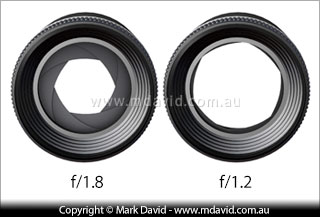
The difference between f/1.8 and f/1.2 is substantial. In a 50mm lens, f/1.8 would have an aperture hole measuring 28mm. At f/1.2 the diameter would expand to 46mm.

But surely f/1.2 isn’t much of a change from f/1.8?

The difference might surprise you.

While the amount of light let into your lens doesn’t change an awful lot between, say, f/24 and f/22, the difference can be considerable when you go from f/1.8 to f/1.2. The maths is a bit complicated, but an f/1.2 lens will let in about twice as much light as the f/1.8, which means it is twice as fast.

Photography

Beginners’ series on digital SLR photography

The essential basics

Digital SLR photography — a beginners’ guide
A quick guide to understanding your new toy

Learning from examples
Picking up where the first article left off

Understanding aperture
This is one of the fundamental tools for controlling exposure.

Understanding shutter speed
This is another of the fundamental tools for controlling exposure.


Making sense of technical stuff

Megapixels
How many is enough?

How much camera gear do you need?
Sometimes, less really is more

How to choose a lens
Making the right choices can improve your shots and save you money

newTips for using tripods
Getting the most out of them

JPG versus RAW
Which is the best way to work?

Understanding histograms
Making sense of this handy tool

APS-C vs full frame
The differences explained, and what it means to your photography

Pixel density in sensors
Helping APS-C cameras photograph distant objects.

Fast lens, slow lens
What’s the difference?

Understanding colour temperature
It doesn’t have to be complicated.

Understanding resolution
What it means, as it applies to digital photography


Photography words explained

What’s a 100% crop?
I explain a term you often hear in digital photography

newWhat are specular highlights?
You’ll recognise them when you see them

newWhat is bracketing?
A commonly-used word for a handy trick


Photography at night

Photographing small critters
in the dark

How I take my shots when there’s no light

newTaking pictures of the moon
You need a fairly long lens, and these simple tricks

Common problems and their solutions

Washed-out colours in photos
Why it happens, and how to prevent it

Understanding exposure compensation
Why your photo subject can look so badly exposed, and what to do about it

Understanding dynamic range
Dealing with too much contrast

Working in harsh light
Getting some of the colour back into midday photography

Getting sharper pictures
Understanding the things that stop your photos from being tack-sharp

Noise in your images
What causes it, and what can you do about it?


Taking things further

Using a telephoto lens to blur the background
Here’s an easy-to-understand explanation of why it happens

Macro photography part 1
Using your DSLR for bug shots

Macro photography part 2
Ironing the bugs out of bug shots

One simple trick
The easiest way to get better wildlife photos

Wildlife photography
Tricks the pros use to get better pictures of critters

Bird photography part 1
Small, distant, and feathered does not have to mean a bad photo

Bird photography part 2
More hints for beginner bird photographers

How I take photos of frogs
These tiny critters require a technique all their own.

Using software to ‘fix’ your photos
A few suggestions for image editing


Advanced stuff

Image Stacking
Using software to achieve extraordinary Depth of Field

Sneaky deep-etching
A fast way to cut complicated objects out of their backgrounds


Other photography stuff

BLOG (sort of)

The elusive waterskiing duck
It started out as a fun idea …

PHOTO GALLERY

Pics of Australian critters
Some of my recent images

PHOTO SALES

Looking for the right picture?
A small selection of the photos available


Copyright © Mark David. All rights reserved